Dysphoria: Homosexual and Non-homosexual

gender-dysphoria

Originally posted 2021-01-12 16:35:24.

Homosexual Gender Dysphoria is a function of the relationship of sexuality to gender.  Here, presenting socially, sexually and romantically as a man, when you have female sexuality, is the root of the discomfort. These individuals may strongly reject using their penises to penetrate and even refuse any sexual contact with them. They wish to appear to be feminine and to have masculine male partners, and to play the receptive sexual role; anything that conflicts with these will cause dysphoria. (The inverse applies in females.)

These indicators may become visible as early as thirty months, though more commonly around forty, and in genuinely pre-transsexual children, or transkids, will likely be ‘insistent, consistent and persistent’ by age four to five.

books by rod fleming

Continue reading “Dysphoria: Homosexual and Non-homosexual”

Rapid Onset Gender Dysphoria

Originally posted 2020-07-30 14:40:05.

In 2018 the Portman and Tavistock, (now the Portman Institute) the UK’s main gender clinic for young patients, reported a more than 4500% increase in referrals for Gender Dysphoria over 8 years. FOUR THOUSAND, FIVE HUNDRED PER CENT in EIGHT years.

The total referrals for Gender Dysphoria in the last year accounted for were some 2500, up from 97 eight years before. Of these later figures, 1800 were young females. Nearly 2000 were under 18, in the previous year alone. That beats any stats on this, anywhere and to make it even more shocking, whereas the historic prevalence amongst females has always been less than 1/3 that for males, in the more recent referrals this is reversed, with more than 2/3 being female. But what has this to do with Feminism?

In classic theory, gender transition is provoked by Gender Dysphoria, a sense of more or less intense discomfort at being obliged to socially present as the gender one’s birth sex might suggest. It occurs in males and females and in two completely distinct forms in each: homosexual and non-homosexual. This might not always seem to be the most sympathetic way to triage the forms, especially in cultures which remain deeply uncomfortable with sex, such as the Anglo-Saxon ones, but it works.

Continue reading “Rapid Onset Gender Dysphoria”

Kinsey and the definition of a Homosexual

kinsey lied

Originally posted 2022-06-22 15:00:05.

It has become fashionable, in the West, to ascribe certain meanings to the word homosexual that were not intended when it was coined. This began with the publication of the Kinsey Reports in 1948. Originally, the term meant ‘an unmasculine male who is receptive in sex with other males’ and so conformed exactly to Asian terms like bakla and kathoey, and to similar terms globally, for example travesti in Brazil. It also was a direct equivalent to terms like catamite, as well as others. Today we might usefully use the word bottom in the vernacular.

[kofi]

It was coined in the late 19th century by an Austrian-born Hungarian psychologist, Karoly Maria Benkert and was quickly adopted by others. The term applied exclusively to a type of person. It did not refer to a set of acts, as there were already terms for those, such as sodomy and buggery. Indeed, many homosexuals did not even engage in these acts, as Freud noted. The crucial issues were the subjects’ rejection of masculinity in themselves and their unreserved attraction to it in others.

a homosexual
This is what a Homosexual should look like. Cute bulge, pet.


books by rod fleming bakla

Continue reading “Kinsey and the definition of a Homosexual”

Social Autogynephilia and Schadenfreude.

Originally posted 2017-10-24 21:35:44.

Autogynephilia is ‘a man’s propensity to be sexually aroused at the thought or image of himself as a woman’. For many practical purposes we might restate that as ‘a man’s overwhelming desire to be a woman’, to ‘become that which he loves’ and so on. It is a man’s deeply-felt identification with the object of his desire. So what might social autogynephilia be?


Continue reading “Social Autogynephilia and Schadenfreude.”

Elephant in the Room (and Crocodiles)

travestis

Originally posted 2013-09-30 15:05:59.

They’re the elephant in the room, where relations between ladyboys and men are concerned.

Elephant, you say?  Well, almost without exception, the assertion is made that the men who like ladyboys are straight. Yet when you talk to ladyboys in private, a very different picture appears. Half at least of men who seek out ladyboys, far from being straight or anything close, are closet Autogynephiles (AGP) (and homophobic to boot). They’re not homosexuals, but they are definitely not ‘straight’ either.

This is borne out by research done at Northwestern University by Ken Hsu et alia.

We would not expect honesty from these men about this; after all, look at the lengths they go just to deny their own sexuality and maintain a false façade of hetero-normativity. The elephant must be hidden. Their words may be taken with a moderately-sized bucket of salt. But what about the girls? Why do ladypoys ever lend credibility to this falsehood? Why don’t they just call out these guys as closet queens from the get-go?

books

Continue reading “Elephant in the Room (and Crocodiles)”

Sex Atypical Boys

Originally posted 2018-04-27 09:52:47.

Nearly all Sex Atypical boys, if they persist, will become adult Homosexual transsexuals (HSTS) or pseudo-masculine Homosexuals.  These are exclusively attracted to masculine men. This has been established beyond doubt and one would have thought that, in our enlightened era, we would be happy to go along with this. But a movement has coalesced that aims to challenge this: the ‘gender critical’ movement.

Characteristics of Sex Atypical boys

The obvious clustering of physical and behavioural characteristics around childhood Sex Atypical boys, makes it clear that these individuals are naturally shifted towards opposite-sex norms. In other words, people who are Sex Atypical in childhood are naturally so.

Which type they will develop into, the True Transsexual or HSTS, or the pseudo-masculine gay, cannot be predicted in childhood. To attempt to condition them towards one or the other — almost exclusively, in the West, towards the pseudo-masculine form, is grossly abusive, yet it is clearly what the gender-crit movement exists to do.

[kofi]

 

books

Continue reading “Sex Atypical Boys”

The Case of Ms. Taken Identity: Amanda Grimes

Originally posted 2018-04-02 11:52:33.

The Case of Ms. Taken Identity

By

Amanda Grimes  


Introduction    

As a fully transitioned transsexual I have often heard the phrase “Gender Identity”, in fact it is contained within the name of the disorder with which I was diagnosed, but never have I ever stopped to consider the validity or accuracy of this term until recently. In a recent comments thread on a Youtube video where a somewhat vocal and clearly autogynephilic trans activist was constantly making the argument for her validity as a “real woman” based upon the existence of her self-declared “female identity”. The question “Do you have a gender identity?” was posited to me by another HSTS woman on the thread.

My initial response was to say “No or if I do I am unaware of it”. However, on reflection it seemed to me that question required a deeper examination rather than just a cursory dismissal. Also it raised the question for me that, if I do have a gender identity, what if any part did it play in my decision to transition?

The-Warm-Pink-Jelly-Express-Train-Rod-Fleming

Continue reading “The Case of Ms. Taken Identity: Amanda Grimes”

Gender fluidity: canard or conundrum?

Originally posted 2017-01-30 10:14:50.

Gender fluidity has come much under the spotlight in recent years. It has been suggested that there are ‘thousands of genders’, that ‘gender is a spectrum of gradations’ and even that it doesn’t exist. Yet if you walk down the street in any part of the world, you will see two genders. So how can this be?

This baffling conundrum is what you get when people don’t do enough research. In fact, BOTH the binary model and the gender-spectrum model are valid; but their relationship is being wilfully misunderstood.

kulick-travesti

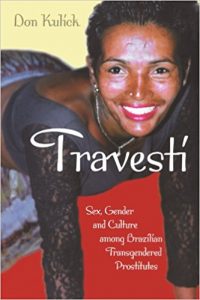
In large parts of the world, but best documented in South America and Asia, the principal gender division is not between men and women but between men and ‘not-men’. I have referred to this before and it was well described by Prof Don Kulick in his 1998 book ‘Travesti’.

books by rod fleming

Continue reading “Gender fluidity: canard or conundrum?”