
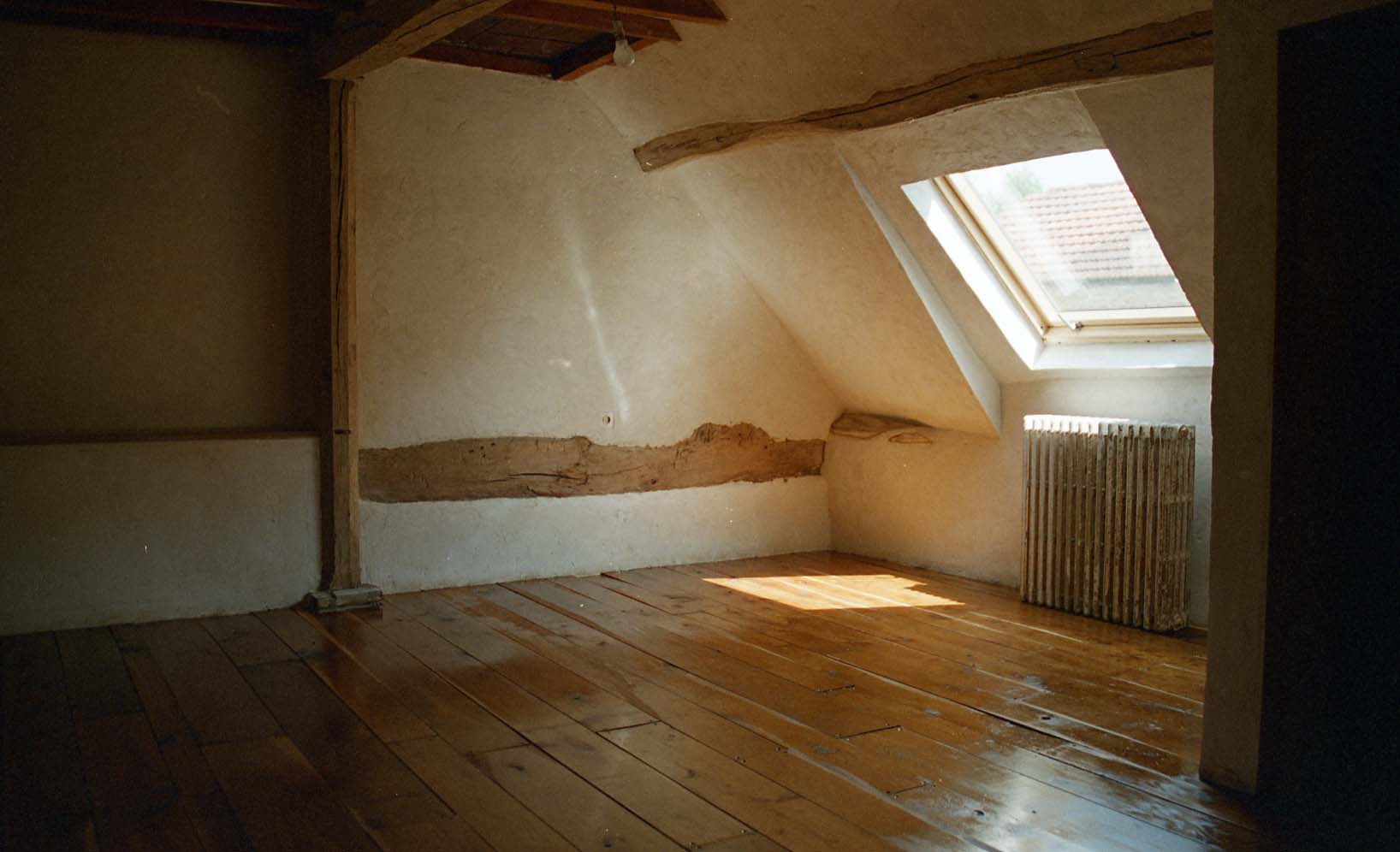
Wood in Traditional Building 2: Poplar and Pine

Originally posted 2014-03-12 13:35:43.

Everyone will be familiar with the beautiful poplar trees that make valleys in Burgundy and elsewhere so charming to the eye. Poplar produces straight-grained timber of prodigious length. The wood is soft and easy to cut, and it holds nails very well. It resists splitting firmly because is has an interwoven grain, so it is tricky to plane well; better to use a power plane. But poplar is in any case best kept for rough work.

It has two big disadvantages; it can to warp severely as it dries, so great care must be taken in stacking; and insects just love it. Poplar should never be used unless it is treated or painted, or else the woodworm will have a field day. However, it is reasonably resistant to rot, and as long as it is used with care, is a useful timber. It is cheap and plentiful, light and easy to handle.

Unfortunately, poplar is usually grown individually, in long thin avenues, or as windbreaks along the edges of fields, and more rarely in plantations. Its presence in the beautiful valleys of central France is a great asset visually. However, this causes a problem when it is cut for timber.

Continue reading “Wood in Traditional Building 2: Poplar and Pine”
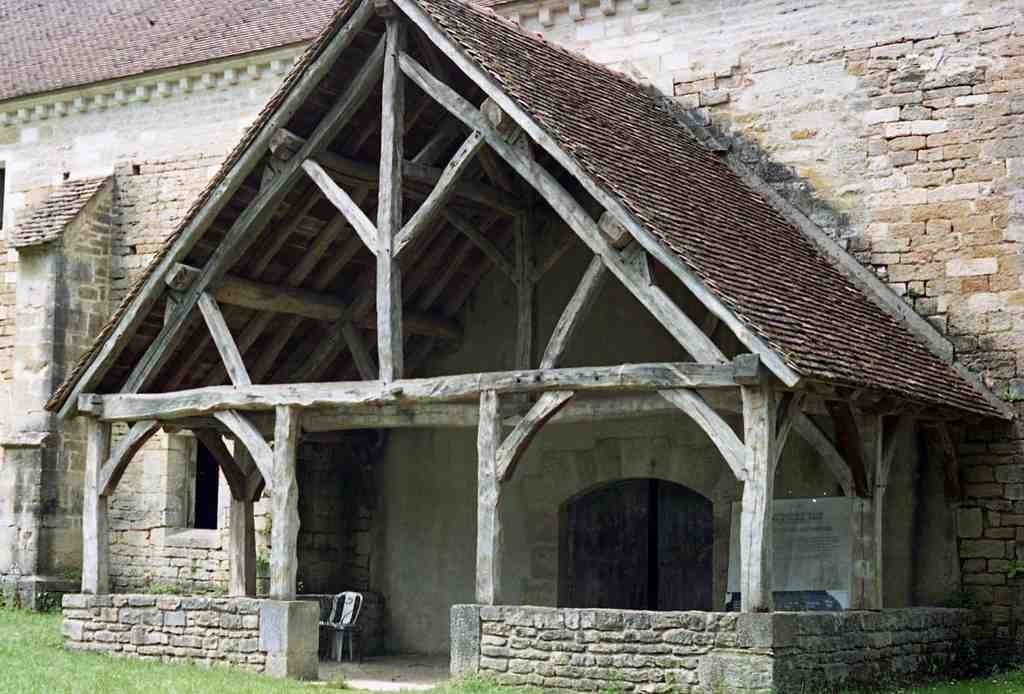
Wood in Traditional Building 1: Oak

Originally posted 2014-02-18 12:54:42.

Wood is, along with stone and earth, one of the principal materials used in the construction of buildings, and particularly older buildings. The principal varieties used are oak, poplar and beech, known as hardwood in UK.  Spruces and pines(softwood in UK) are also much used, especially in new-build.  It is important to have some understanding of the nature of wood, its uses in the older house and some sympathy for its virtues as well as its limitations.

Wood is used in a wide variety of applications, and the most important of these are the support structure for floors; the roof timbers and associated work; and the interior finishing timber. Timber is also used in the construction of interior walls and in many areas in the construction of supporting walls.

There are three timbers commonly found in older buildings in France, namely oak, poplar and pine. Other timbers are often found as parts of outhouses and sheds.


Continue reading “Wood in Traditional Building 1: Oak”

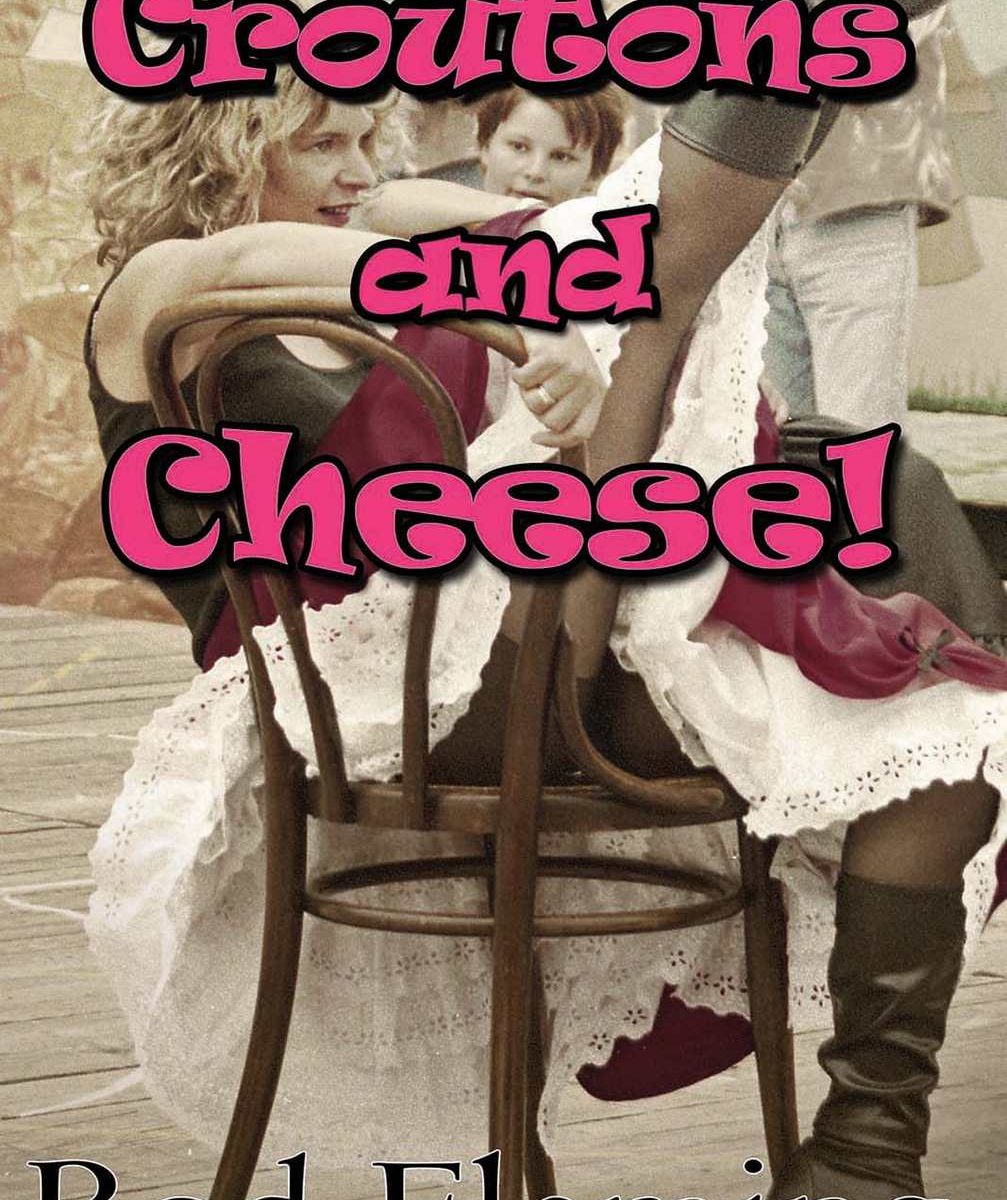
Croutons and Cheese! French Onion Soup 2

croutons-and-cheese

Originally posted 2021-01-08 10:47:24.

Croutons and Cheese: French Onion Soup 2 is the second in Rod Fleming’s hilarious series of memoirs about his life in France. Filled with anecdotes about aviating cats, the Bull in the Back Passage, what to do about ex-pats, transporting the cheese to Scotland, it’s a laugh a minute.

With the lovable and roguish characters you first met in French Onion Soup!, this book will keep you entertained all right, so much you’ll come back for a second read!

Available now in paperback: ISBN: 978-0-9572612-4-2


Read More and Buy on AMAZON.COM

Read More and Buy on AMAZON.CO.UK

The stove story

Originally posted 2013-06-25 17:13:05.

Life certainly has an interesting tapestry here in P’tit Moulin. This morning I was awakened at some ungodly hour—well, just before ten actually, but I am semi-nocturnal—by an excessively enthusiastic clangour (good word that) of my front door bell, of which more later.

 Well, I threw on a pair of jeans and a T and went to see who had disturbed the peace in this manner, and there on my doorstep was a rather scruffy individual, definitely of the traditional French horny-handed persuasion. Behind him was a truck that looked, to my bleary and unaided vision, even older and more dilapidated than my Isuzu, and that’s saying something.

He must have recognised my absence of recognition. ‘Sir,’ he said (in French of course, I’m just trying to make it easy for you. Do keep up.) ‘Sir, the last time I passed you said you had some scrap.’

Continue reading “The stove story”

Bastille Day: Death of a village in France

Originally posted 2017-07-26 21:58:12.

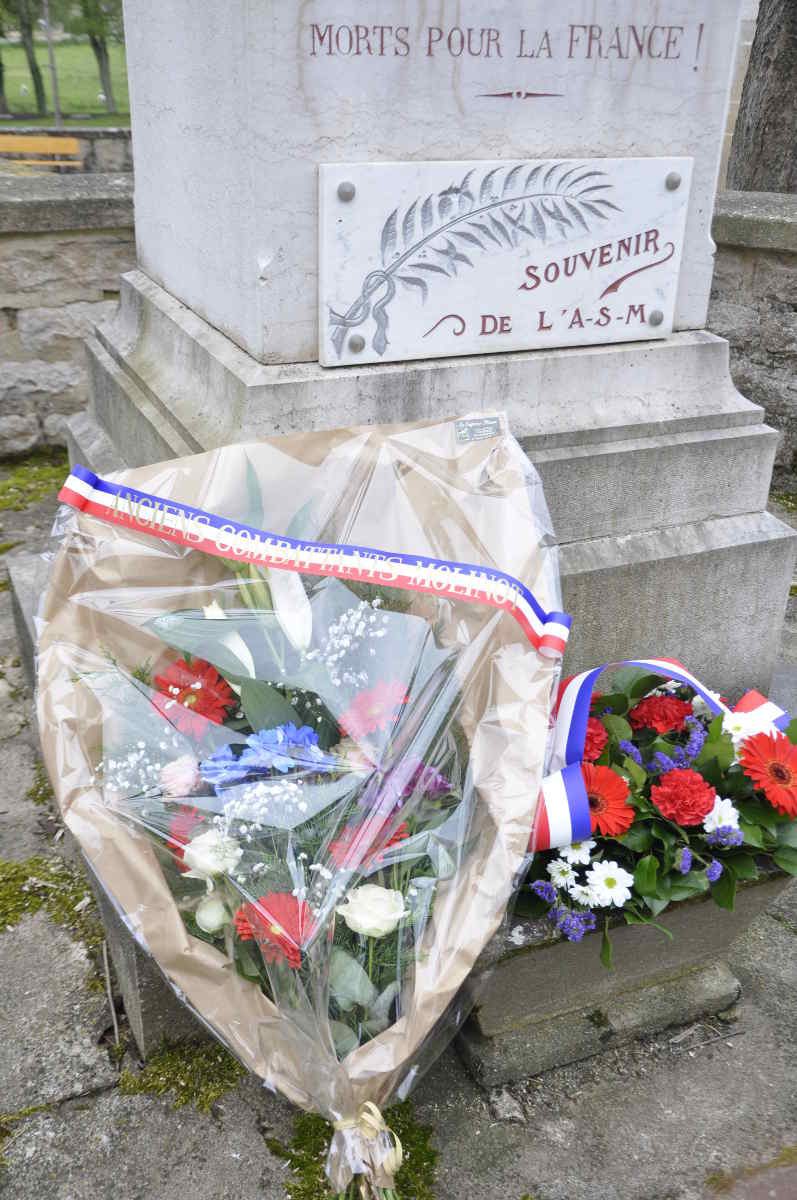
I met Denis Poulot by the old lavoir as I ambled down to the Salle des Fetes. We’ve known each other for 24 years now; we’ve never been especially close but we share a relaxed camaraderie. We paused in our journeys to shake hands and exchange formalities, then carried on. Inevitably, this being Bastille Day, 14 July and we were both going to the ceremonial vin d’honneur, we chatted about Bastille Days past.

Denis drew up and looked into the distance. ‘It’s not the same any more.’

Molinot is a village deep in the Arriere Cote of Burgundy, has been a part of my life since 1993. In those days, the village was famous for the extravagance of its Bastille Day celebrations and people would come from miles away to enjoy them. Indeed, ours was so popular that many villages around had their celebrations on another day, since all the locals were at ours; and of course we reciprocated, making for a thoroughly convivial week.

Continue reading “Bastille Day: Death of a village in France”

The Horror of the Blocked-Up Window

Originally posted 2013-03-07 02:02:33.

I don’t know why it is that I have accumulated such a collection of ─ well, I suppose you might say ghost stories, though I tend to think of them in less definite terms myself. The fact is that I have never seen a ghost with my two eyes, and in fact I long ago gave up any hope of doing so. I must not be one of those gifted with the sight, as it were. However that may be, though, I seem to be a magnet for stories of the weird and the macabre, as if they seek me out─ and in the strangest of places.


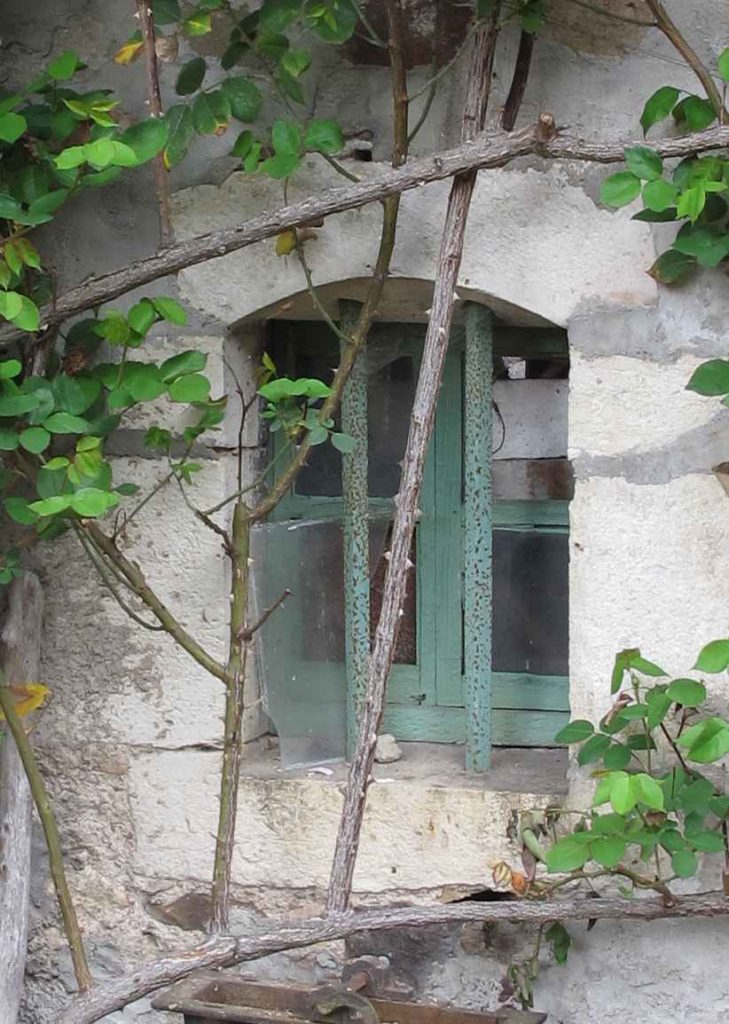
The most recent addition to my collection was found in just such a casual way as all the others. I had been on holiday in France, when I was suddenly called back because of an illness─a very severe one─in the family. It happened that the nearest airport from which I could get a flight home was Lyon, so I made my reservation and got myself there as soon as I possibly could. Continue reading “The Horror of the Blocked-Up Window”

The Fall of France: Macron’s election and the Greater Germany

Originally posted 2017-05-08 19:33:38.

Yesterday, the 7th of May 2017, will be long remembered. It is the day of the Fall of France.

This is not the first Fall of France. In 1940, German troops stormed through the Ardennes, completely surprising the French General Staff.

Nobody who has read Chester Wilmot’s ‘The Struggle for Europe’ can fail to recognise the similarities. In 1940, the French Establishment was represented by octogenarian and even nonagenarian generals. Their incompetence was complete. Counter-attacks were so badly organised that battalions engaged on different days or in the wrong place. Communications were by carrier pigeon. The French armour, superior in numbers and quality to the German, was not allowed to operate freely and instead was used as semi-mobile artillery for infantry support.

The result was that France capitulated. That was the first Fall of France. An uneasy truce was declared, in which the Germans gave the French permission to govern themselves in territory not already under a German jackboot, but it didn’t last long; in 1942 the Germans assumed complete control.

Seventy-two years later, the second Fall of France has just occurred. Instead of dottering relics from bygone wars, fought decades before, today the French establishment is represented by a dandified fop called Emmanuel Jean-Michel Frederic Macron. This poodle sans couilles is now the President-elect of France.

Continue reading “The Fall of France: Macron’s election and the Greater Germany”

The English Don’t Wear Kilts

Originally posted 2016-10-05 12:56:05.

I have begun wearing kilts again. I used to do this years ago but, erm, passage of time rendered them, uh, too small. Alack, the Fleming waistline now oscillates between 36 and 40 and those distant days of 32waist/32leg are long since departed. However, last year I bought a few more and now I wear them pretty much every day. And when I’m not wearing the kilt, I wear tartan trews.

Now what could possibly have spurred this aberrant behaviour? A sudden dose of ‘alt-fashion’ in the old fool’s noggin? A passionate longing for the owld country? Simple homesickness? Senility?

Continue reading “The English Don’t Wear Kilts”

Muslim kills 84 in Nice terror attack.

Originally posted 2016-07-15 12:04:47.

We wake to a morning of black tragedy in Europe as it has, again, been scourged by a Muslim terror attack. This great continent with its myriad and vibrant culture, that has given so much to the world, is on the long march to its final Calvary. And all I can say, my heart breaking, is ‘I told you so.’


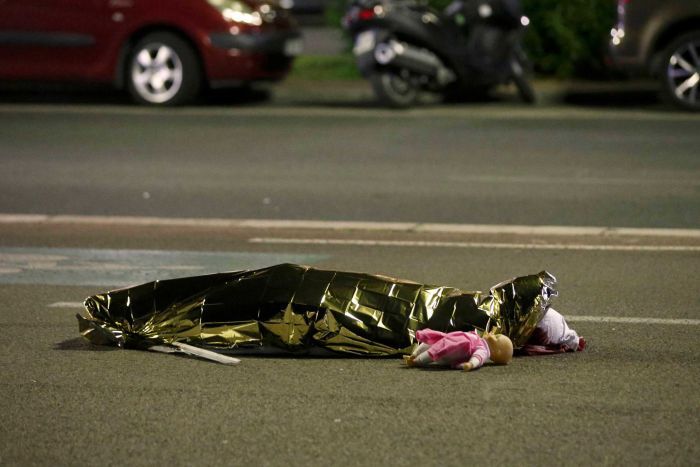
Yesterday, the 14th of July, a Muslim terrorist hired a truck and drove it at speed through the crowds celebrating Bastille Day in Nice. Weaving from side to side to kill as many as he could, the driver, a Franco-Tunisian, brought death and horror to a 2-kilometre long section of the Promenade des Anglais, on the seafront. At least 84 people were murdered and another 18 may not survive their injuries. The killer’s name was Mohamed Lahouaiej-Bouhlel. The attack is typical of those carried out by Daesh, aka ISIS or ISIL.

Bastille Day is as great a family celebration in France as Christmas is, perhaps even more. Children, among the dead and maimed, were out having fun with their parents. Whole families were run over. Wives were murdered in front of their husbands as they shared a brief moment of happiness.

Continue reading “Muslim kills 84 in Nice terror attack.”

War with Islam: ideology, not people

Originally posted 2016-06-19 12:56:56.

Islam is locked in a war with secular democracy and moderate Muslims themselves.

In one week in, June 2016, a Canadian, Robert Hall, had his head hacked from his body in a brutal public murder. Two days later, over 100 people were gunned down in a nightclub in Orlando, Florida; forty-nine died. Two days after that a married couple, both police officers, were stabbed to death in their home outside Paris and their infant child held hostage until the killer was shot by police. All in one week.

The carnage has not slackened. In the five years since this was first written, the slaughter has continued, most recently in the murder of Sir David Amess, a British Parliamentarian, who was stabbed to death by, yes you guessed it, a fanatical Muslim.

There was nothing whatsoever to connect these victims, on the face of it. Nothing. A middle-aged professional, young people in a nightclub, serving police officers, politicians. They died in equally unrelated locations — the Philippines, the USA, France, Britain.

But they are connected all the same: they were all murdered in the name of Islam, the ‘religion of peace’.

Continue reading “War with Islam: ideology, not people”